AGAINST THE GIG ECONOMY
During my exchange at Nottingham University, I took part in a group project within a social experiment. We were to represent one side of an issue and display it within a visual form. We were given the stance of being against the Gig Economy. This is a type of employment that is defined as short-term, freelance or independent contracting. The workers' hours vary from week to week which prevents them from having a stable income. The final presentation was in the form of a debate in opposition with a group representing the For side of the issue. Our task was to design an experience for the audience in such a way that convinced them to agree with our side of the problem.
Our visual outcome was in the form of a game. The players were given the task to build a simple puzzle in three minutes. The pieces were located in boxes that had their team's icon on it. These were tied up on strings from a structure that hung from the ceiling. It was a turn based game where one person from each team retrieved one box from the structure at a time. However the reality of the game was that it was unwinnable because none of the teams' boxes contained all the pieces to complete the puzzle. The number of pieces varied per team, where only one was lucky enough to contain 5 out of the 6 pieces needed. The boxes that did not contain pieces had coins in them and some form of expense that they were required to pay. The coins represented the part of a workers income within the gig economy that goes to costs not covered by their contractor.
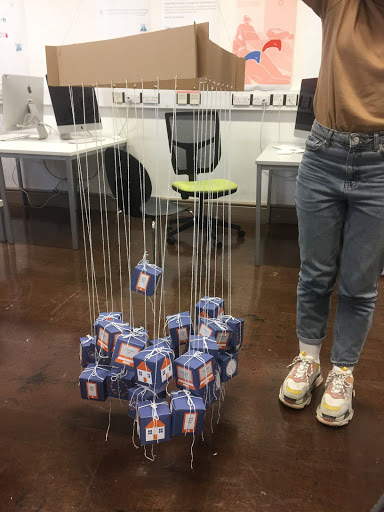
Structure holding up boxes, hung from ceiling. String and cardboard.
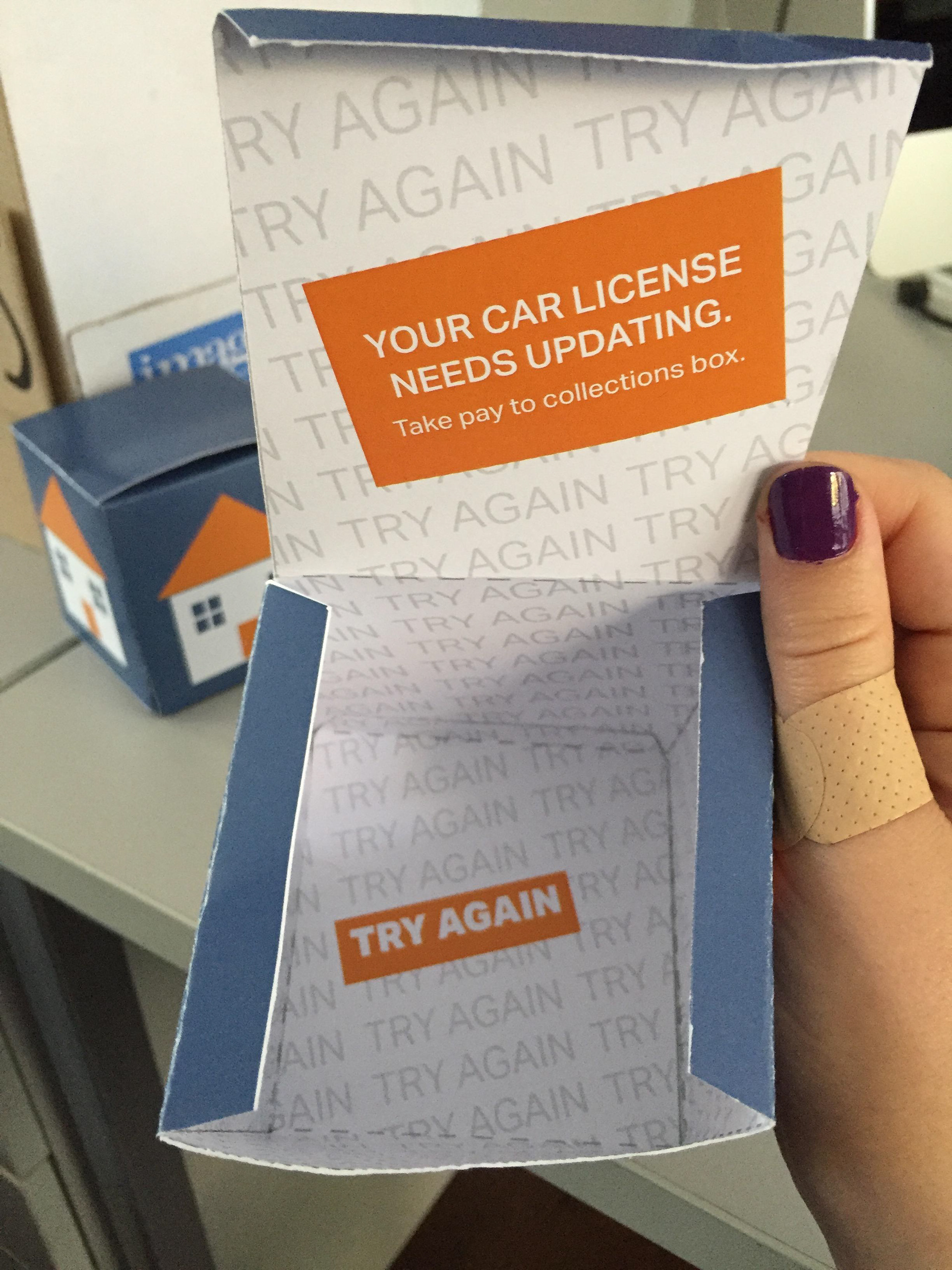
Inside box that contained a coin
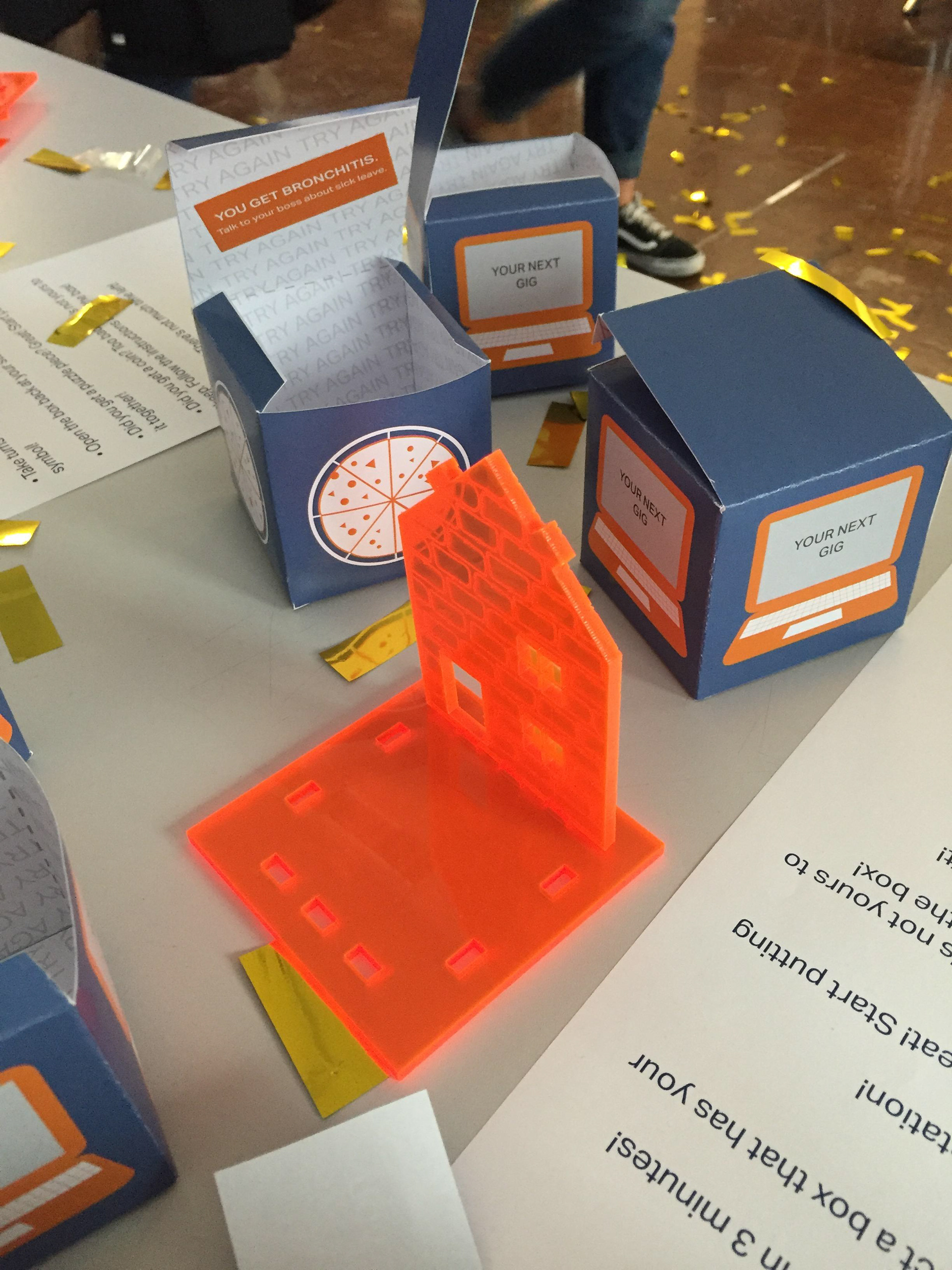
Image during game, putting puzzle together
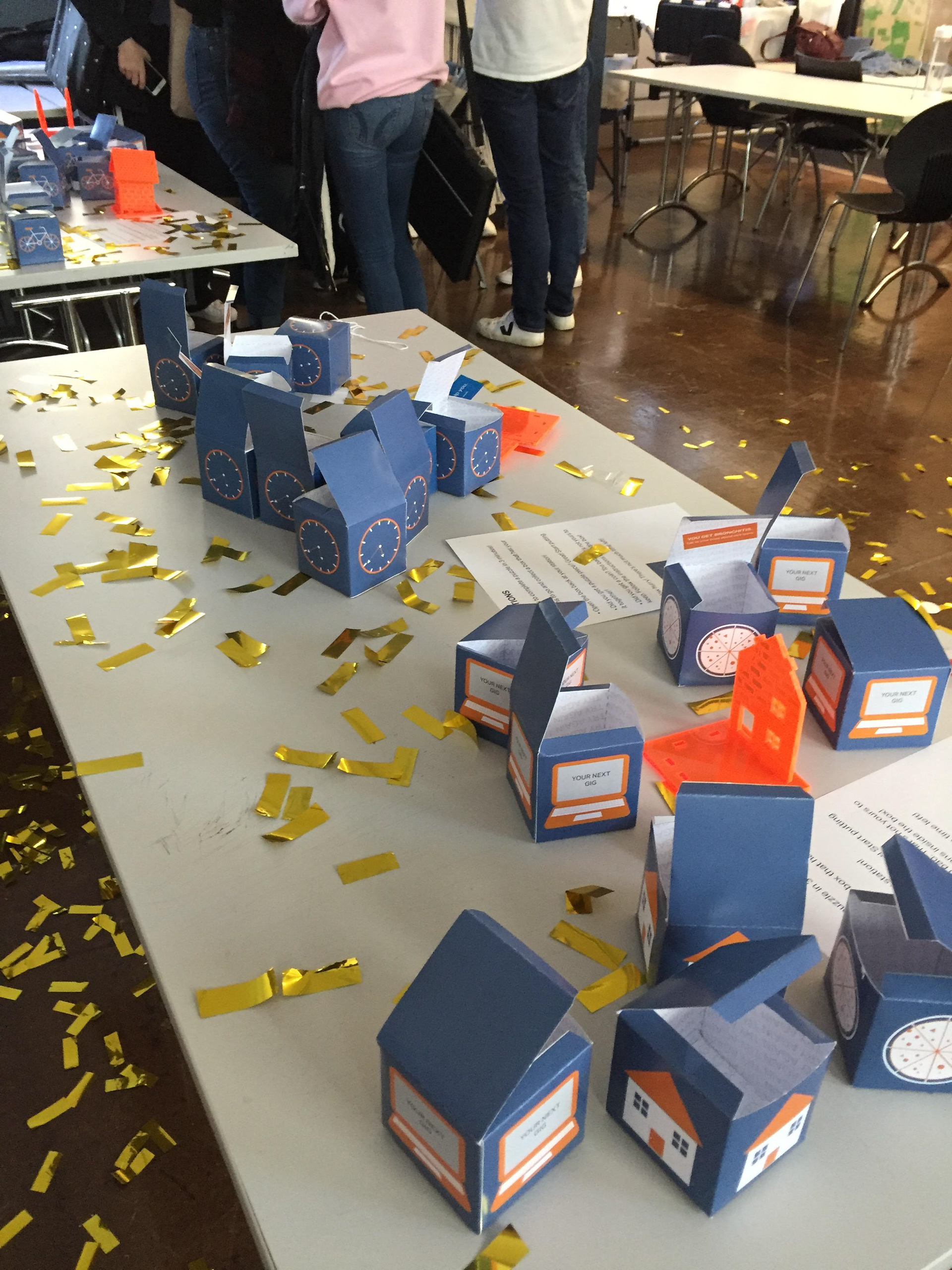
Aftermath of game
Motion Graphic
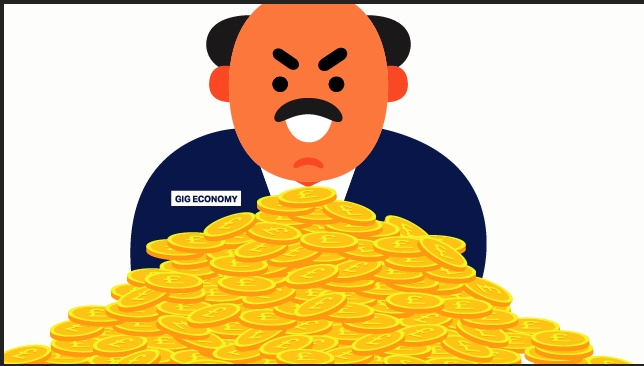
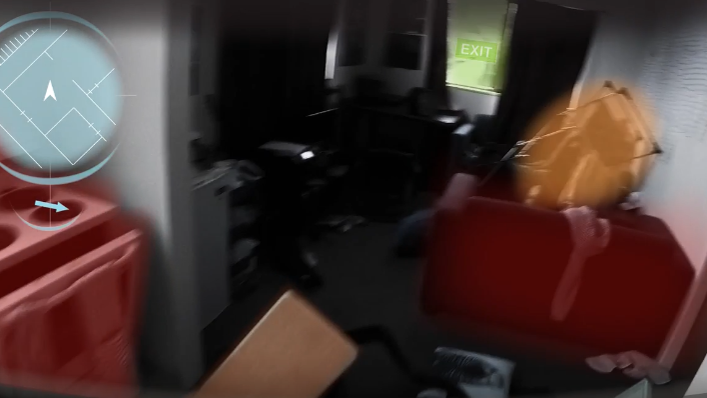
Once the timer ran out, a motion graphic played on a monitor in-front of the participants. This was one of the tasks that I individually completed. It was accompanied by the popping of gold streamers and uplifting music. The graphic starts by showing all the coins collected from each teams boxes piling up. A boss figure then appears behind this pile. He is chuckling with an evil grin on his face. This results in an end to the game where we state to the audience that the only true winner in the gig economy are higher powers of each company that the employees work for. We intended for it to be simple and to the point. We stated the dark and often untold reality of this type of employment with the addition of facts and figures.
The Construction
Our team of three built the boxes by hand and created the puzzle pieces with a laser cutter. A complete puzzle made up a house which consisted of 6 pieces and a base that they slotted into. We created them digitally with specific measurements for them to fit each other. We decided on a house because it resembles an aspiration that many individuals have. They aim to either own one and/or to have a family. We laser cut several tests in order for them to fit correctly. The final puzzles were cut on a neon orange acrylic plastic sheet. We liked the vibrant colour that it brought to the game as well as it being a material that is similar to young children's puzzle pieces, like Lego.
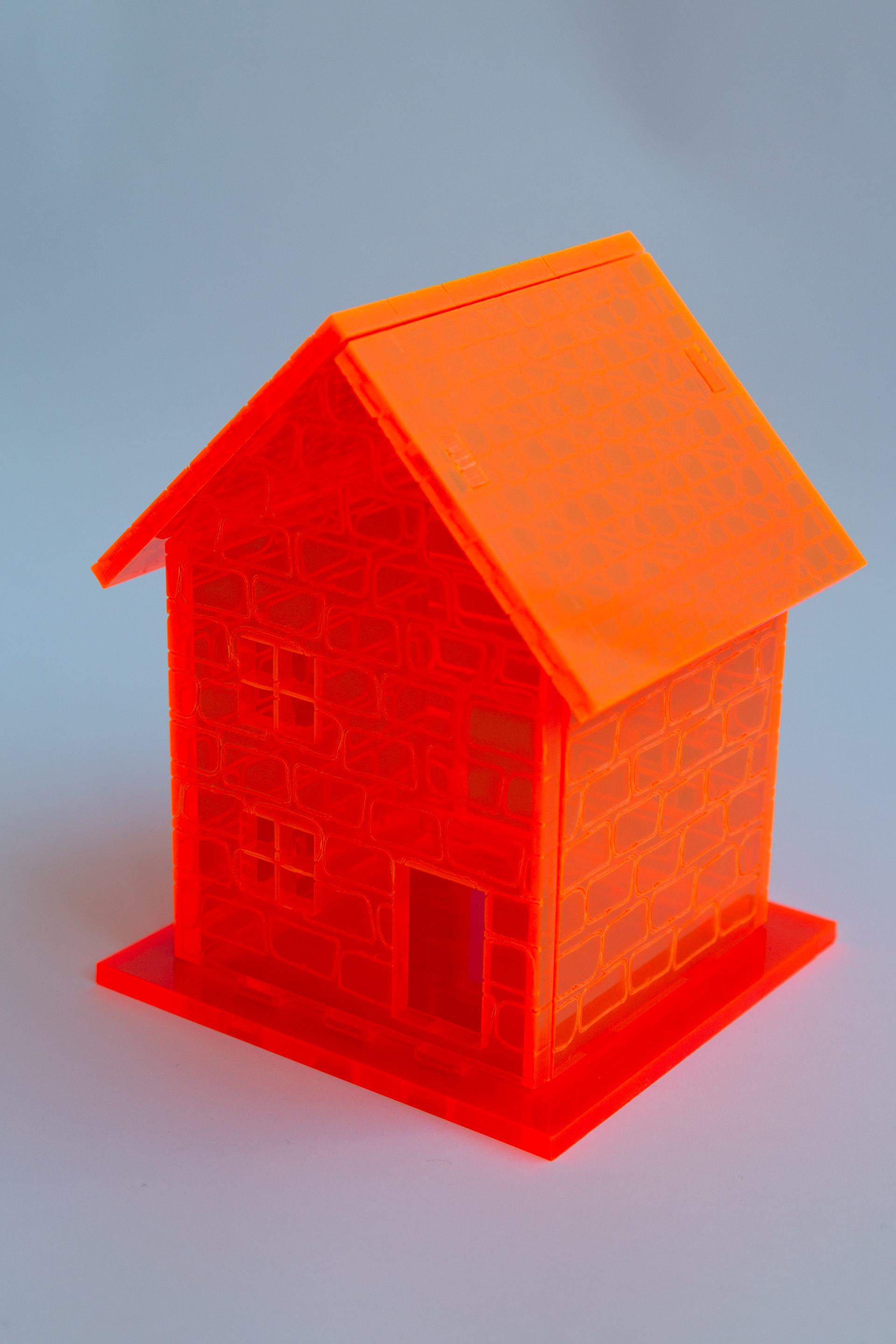
Completed puzzle, Neon Orange Acrylic.
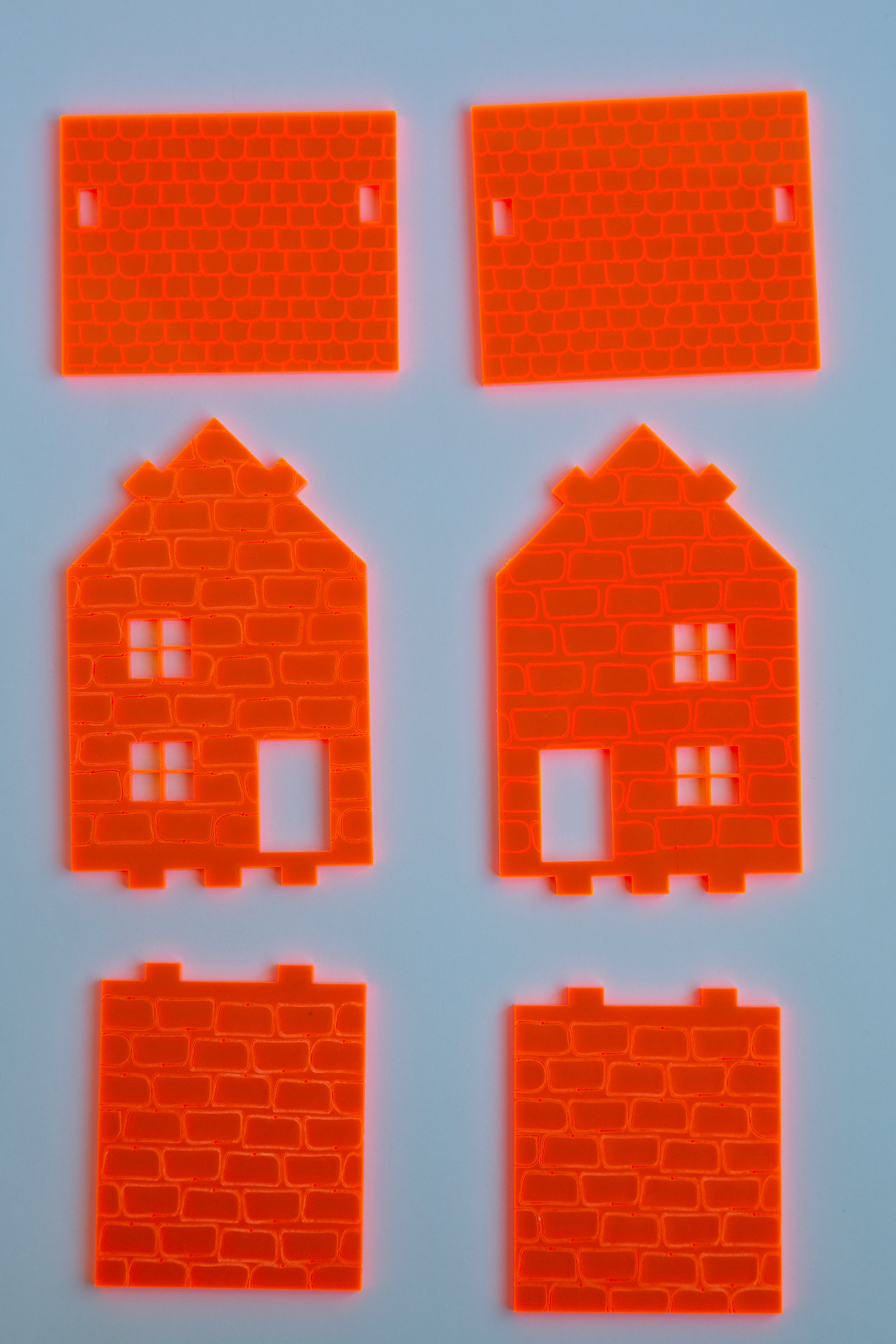
Individual pieces for puzzle, Neon Orange Acrylic.
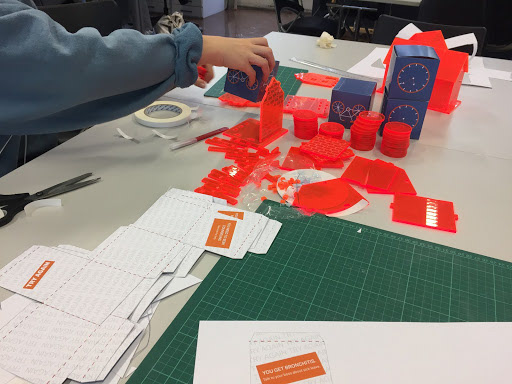
Construction of boxes and collection of puzzle pieces
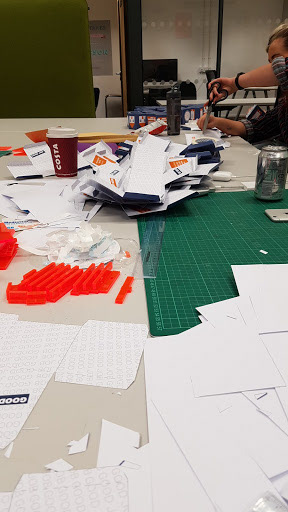
Construction of boxes
Illustration style
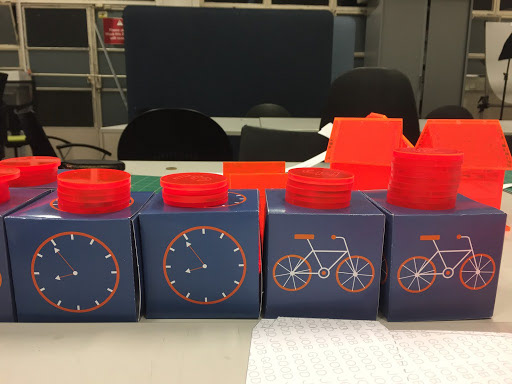
The visual elements that we designed for the project were intended to be bold but simple. The colours used coincided with the rest of the elements. The icons in the image on the left that I designed were used for the different teams in the game. Each of them represents elements within the gig economy, such as a bike used for deliveries and a laptop as
tool for tech-based jobs.
tool for tech-based jobs.
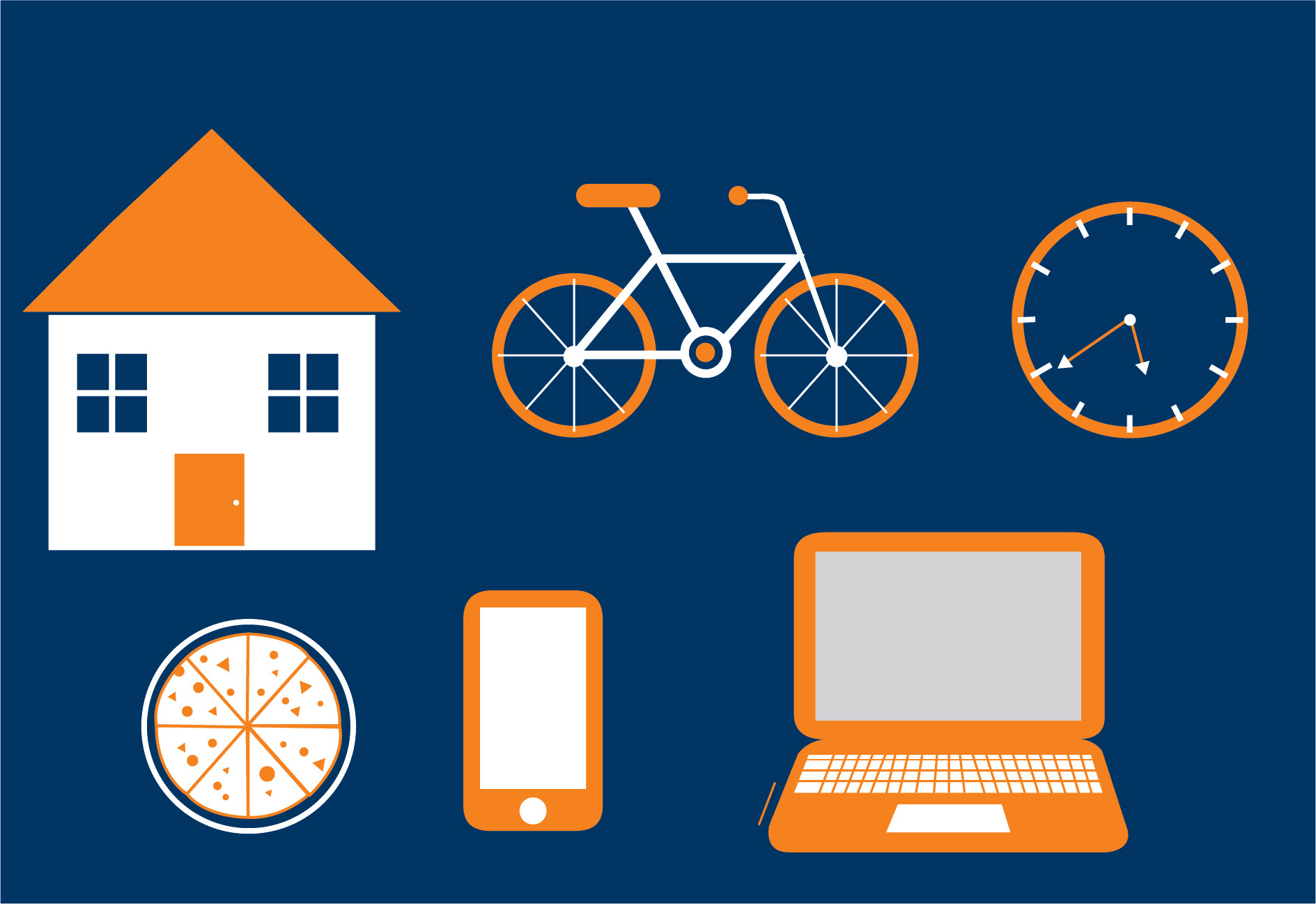
Icon used on boxes for teams